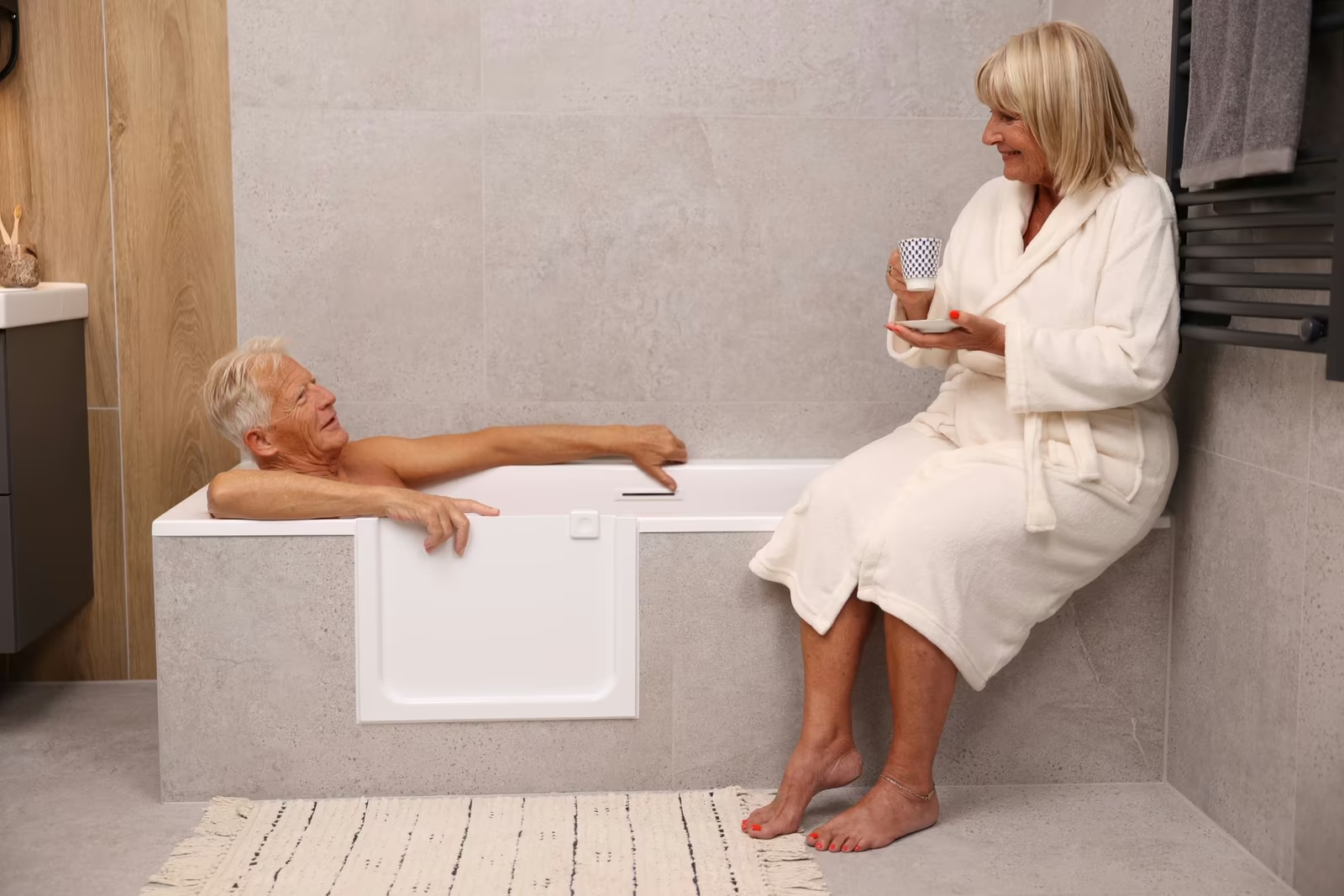
There is no single best way to make a bathroom safer, only the one that fits your needs, your bathroom and your budget. Below we compare the main options people use to bathe or shower safely, with the real trade-offs of each, including our own. UDOOR converts your existing bath with a watertight door, which suits many people but not everyone, and we say where.
How to choose a safe bathing solution
Three questions usually decide it. Do you want to keep bathing, or move to showering? How much disruption and cost can you take on? And how much space does your bathroom have? Keep those in mind as you read the options below.
UDOOR bathtub door conversion
What it is: a watertight door fitted into your existing bath, so you step in instead of climbing over.
Good for: keeping your bathroom as it is, one-day fit, from £990 for the bathtub frame version or £1,490 for the watertight bathtub door, bathe or shower through the same door.
The trade-off: it works with the bath you already have, so it is shaped by your current tub. If you want a brand-new spa-style unit with a deep seat and jets, a replacement walk-in bath fits that better than a conversion.
Walk-in bath (replacement unit)
What it is: a whole new bath with a built-in door and often a seat.
Good for: a deep, seated soak and built-in features.
The trade-off: it means removing your existing bath, re-plumbing and often re-tiling, so it is more disruptive and usually far more expensive, with days of work.
Walk-in shower or wet room
What it is: a level-access shower area, sometimes the whole floor.
Good for: standing or seated showering with no rim to step over.
The trade-off: a full conversion is a building job with tanking, drainage and re-tiling, so it is costly and takes time. It also removes the option of a bath.
Bath lift (powered seat)
What it is: a battery seat that lowers you into and out of the bath.
Good for: a low-cost, no-installation way to keep using an existing bath.
The trade-off: you still get in over the rim before the seat lowers, it needs charging, and it does not help if lifting your legs over the side is the problem.
Grab rails and a bath board
What it is: rails and a board that add support and a seat across the bath.
Good for: the cheapest first step, useful support for many people.
The trade-off: they help you balance but you still climb over the rim, so they suit mild difficulty rather than significant mobility loss.
Step-in or low-threshold bath
What it is: a bath designed with a lower side or a small step.
Good for: a gentler entry than a standard high-rim bath.
The trade-off: it is still a replacement unit and a full install, and there is still a threshold to cross.
Bath hoist (carer-assisted lift)
What it is: a mobile or fixed hoist that lifts you over the rim and lowers you into the water, usually operated by a carer.
Good for: people who cannot bear weight or transfer on their own, where assisted bathing is the goal.
The trade-off: it needs space, a trained helper and often an assessment, so it suits higher care needs rather than independent bathing.
Shower over the bath with a seat
What it is: a shower fitted above the bath, used with a board or seat.
Good for: adding a shower cheaply without replacing anything.
The trade-off: you still climb in and out over the bath rim to reach the seat, which is the main risk for people with reduced mobility.
All options at a glance
| Solution | Keeps your bath | No climb over the rim | Typical fitting | Disruption | Cost |
|---|---|---|---|---|---|
| UDOOR bathtub door conversion | Yes | Yes, you step through a door | One day | Minimal | From £990 (bathtub frame) / £1,490 (bathtub door) |
| Walk-in bath (replacement) | No, replaced | Yes | Days | High | £££ |
| Walk-in shower or wet room | No | Yes | Days to weeks | High | £££ |
| Bath lift (powered seat) | Yes | No, you enter over the rim | None | None | £ |
| Bath hoist (carer-assisted) | Yes | Assisted, lifted over | Varies | Low to medium | ££ |
| Grab rails and a bath board | Yes | No, support only | Hours | Minimal | £ |
| Step-in or low-threshold bath | No, replaced | Partly, a lower step remains | Days | High | £££ |
| Shower over the bath with a seat | Yes | No, you climb to the seat | Hours to a day | Low | ££ |
If you are comparing these options after a hip or knee replacement, one thing is worth knowing: the bath restriction is temporary, not lifelong. NHS guidance stages it. After a hip replacement you may climb over the side to use an over-bath shower from six weeks, but you should not sit in the bottom of the bath for twelve weeks (Leeds Teaching Hospitals NHS Trust). After a knee replacement, the advice is to avoid a bath until the wound has fully healed and you can get out again, which is unlikely before six weeks (Royal Berkshire NHS). The exact advice depends on your operation and your surgeon, so always follow theirs. What often lasts longer than any of these windows is the entry itself: stepping over a high bath rim means balancing on one leg, a recognised bathroom fall risk for older users in general (Mayo Clinic). That is why the options above that remove the climb entirely, rather than just supporting it, tend to solve the everyday problem, during recovery and after it.
Which options let you keep your bath?
A UDOOR conversion, a bath lift, grab rails and a shower-over-bath all keep your existing tub. Of those, only the conversion removes the need to climb over the rim, which is usually the real hazard. Replacement walk-in baths and wet rooms give more features but mean removing your bath.
Your questions, answered plainly
Ready when you are, no pressure
Four details and we call you back within one working day. You pay only after the work is done, card or Klarna.