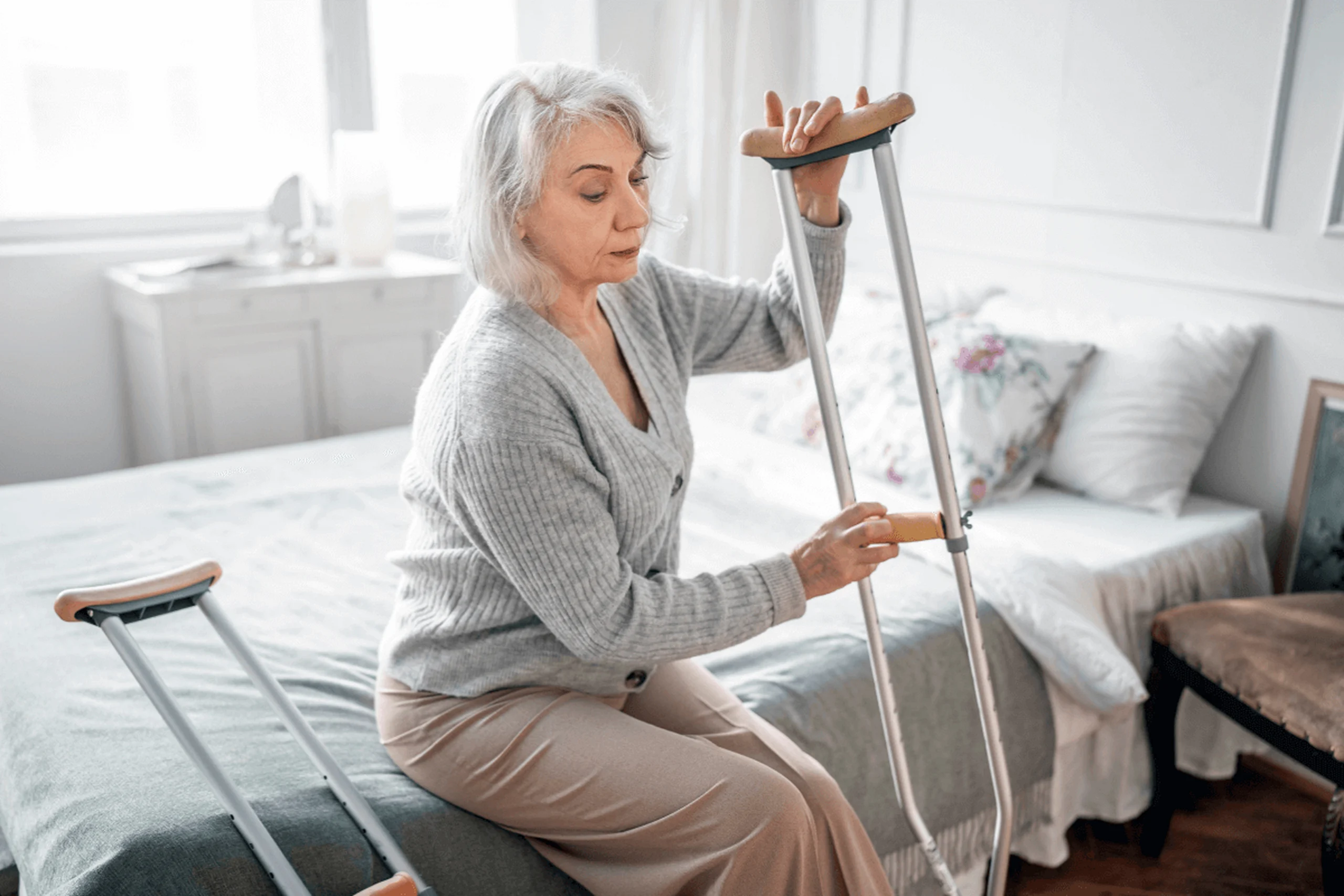
A slippery path, a momentary loss of balance, and suddenly life looks very different. A broken leg, hip injury or recovery after surgery doesn’t just mean pain and rest, it can also mean rethinking everyday life at home, often overnight.
For many people, this is the moment they realise for the first time that their home wasn’t built for how they live now, and the bathroom is usually where this becomes most obvious. The risk of slipping, limited space and a high bath edge present challenges all at once.
If this sounds familiar, whether for yourself or someone you care about, here’s what to focus on and how to make bathing safer quickly, without the upheaval of a full renovation.
Why The Bathroom Becomes Dangerous After Injury Or Surgery
After an accident or operation, your body needs time to heal. You may feel less steady on your feet, move more slowly, or have been told to avoid putting weight on one leg. These are all completely normal parts of recovery, but they can make something as routine as a bath feel daunting, even risky.
Lifting your leg over a high bath edge can be painful at the best of times and after surgery or a fall, it may simply not be recommended. The bathroom floor is one of the most common locations for secondary falls after an accident.
This isn’t just a physical problem. For many people, the worry of bathing alone and the loss of independence that comes with needing help can be just as difficult as the injury itself.
What Matters Most When Health Changes Unexpectedly
A full bathroom renovation is rarely an option immediately after returning home from hospital. What most people need are practical solutions that can be put in place quickly, without months of building work. The most important questions to ask are:
- Can bathing be done safely, without relying on someone else?
- How can you lower the risk of falling?
- How can you maintain independence?
- Can lengthy demolition work and disruption to daily life be kept to a minimum?
If you’re unsure about the answer to any of these, it’s a sign that something needs to change. The bathroom may not be suitable and changes might be necessary.
Quick Improvements That Make A Real Difference
In unexpected life situations, time is one of the most important factors. There are several steps that can help straight away. Non-slip mats, grab rails fitted to the wall, and a bath seat or bath board are all relatively easy to arrange.
However, none of them solve the fundamental challenge of stepping over a high bath edge. For anyone with reduced mobility, that step remains the single biggest risk and the biggest barrier to bathing independently.
How A Bathtub Door Can Help
A retrofitted watertight bathtub door fitted directly into your bath removes the need to step over the bath edge. This is particularly helpful when weight cannot be put on one leg or is afraid of slipping and there’s no need to replace your bath, retile, or carry out any structural work.
Key benefits:
- Installation takes just 4–8 hours, depending on the style of your bath
- Designed to fit into practically any bath shape, even curved baths
- No demolition or tiling work is required
- Your bath remains fully usable for both bathing and showering
- The risk of falls is significantly reduced
- Independent bathing becomes possible again, even during recovery
It’s for this reason that a bathtub door is often installed within days of an unexpected injury or operation.
A Long-Term Investment, Not Just A Temporary Fix
Installing a bathtub door is often done to meet a temporary need, like a broken leg, post-operative recovery, or a spell of reduced mobility. However, most people continue to find it beneficial long after recovery.
Falls don’t stop being a risk once an injury heals, and the peace of mind that comes from a safer bathroom tends to stay valuable long term.
Maintaining Independence Is Reassuring For The Whole Family
A safe, usable bathroom isn’t only a relief for the person using it. For family members, particularly those who live far away or can’t always be on hand to help, knowing that someone they care about can bathe safely and independently brings genuine reassurance.
When an injury happens suddenly, that reassurance can matter a great deal.
Safety Is The Greatest Gift
If an injury has happened suddenly and you’re looking for a fast, reliable solution, the UDOOR can typically be installed within days of your inquiry.
There’s no deposit required and payment taken only once the work is complete. UDOOR also offers a range of additional accessories, including grab bars, anti-slip coating and bath boards. Installation is also available with instalment payment options, making it a viable solution even when a quick decision is required.
Frequently Asked Questions About Bathtub Doors For Recovery
How long does installation of a bathtub door take?
Between 4 and 8 hours. Straight baths typically take 4-6 hours, P-shaped and corner baths usually take 5-7 hours. The bath can be used again after 24 hours.
Is it possible in a prefabricated (panel-built) bathroom?
Yes, it can be installed in most panel-built bathrooms.
Will the bath leak?
No. The door is made with a special sealing system and it opens inward, meaning water pressure during use strengthens the seal rather than compromising it.
Is a bathtub door only for elderly or disabled people?
Not at all. The UDOOR is popular with people recovering from temporary injuries or surgery, families bathing young children, and those wanting an easier way to bathe pets.
Do you need to visit the property first?
No. The UDOOR fits virtually any bath, so a prior survey isn’t necessary.
Does the UDOOR come with a warranty?
Yes, every UDOOR comes with a 10-year warranty as standard.
Ready when you are, no pressure
Four details and we call you back within one working day. You pay only after the work is done, card or Klarna.